
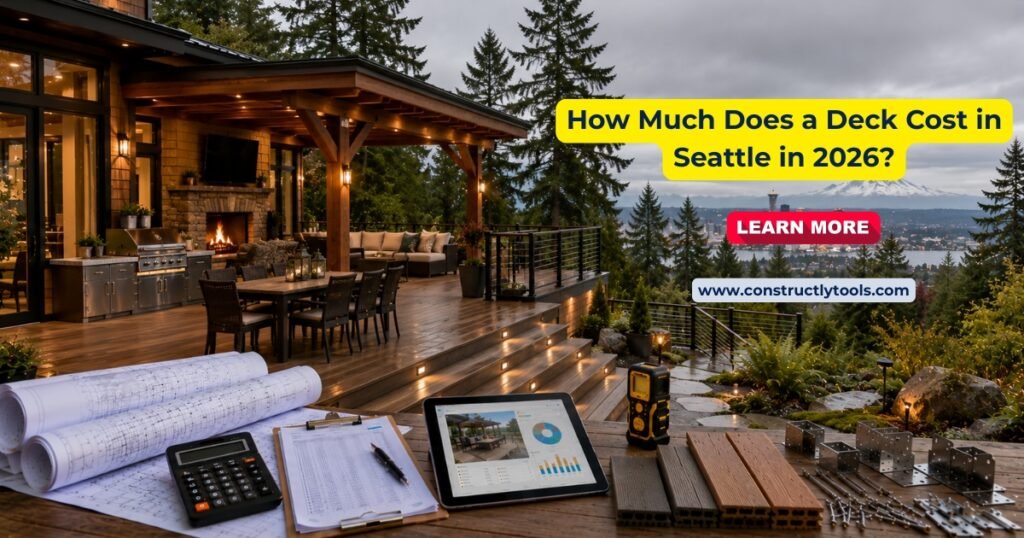
How Much Does a Deck Cost in Seattle in 2026?
📋 On This Page
- Seattle Deck Cost Calculator
- Best Deck Materials for PNW Rain
- Pricing by Deck Size
- Seattle Neighborhood Pricing
- Seattle-Specific Cost Factors
- Best Time to Build in Seattle
- How We Calculate These Estimates
- Typical Cost Breakdown
- Seattle vs. Denver vs. Atlanta
- 7 Money-Saving Tips
- Frequently Asked Questions
- References
Deck costs in Seattle range from $37 to $74 per square foot installed in 2026 — making Seattle the most expensive deck market in our 10-city guide, and for reasons that compound on each other in ways unique to the Pacific Northwest. Seattle's cost of living runs 45% above the national average, directly reflected in contractor labor rates. The Seattle Department of Construction & Inspections (SDCI) charges permit fees calculated on project value that reach $800–$2,500 — the highest in our series. The city's famous rainfall (150+ rainy days annually) demands premium corrosion-resistant hardware and moisture-resistant materials throughout. And Seattle's iconic hillside neighborhoods — Queen Anne, Magnolia, Capitol Hill, Beacon Hill — frequently require engineered footings, elevated post systems, and sometimes crane access that adds $8,000–$20,000 to equivalent flat-lot builds. Understanding these five cost drivers is what separates realistic Seattle deck budgeting from wishful thinking.
🧮 Seattle Deck Cost Calculator
💰 Cost Breakdown
Estimates reflect Seattle metro (King County) contractor rates for 2026. Steep hillside builds in Queen Anne, Magnolia, and Capitol Hill may exceed these ranges by 20–40% due to engineered posts, site access, and drainage complexity. Seattle DCI permit fees (value-based, $800–$2,500) are included. Always get 3 quotes and require on-site visits for any sloped Seattle lot. Corrosion-resistant stainless/galvanized hardware is included in all estimates.
Best Deck Materials for Seattle's Rainy Climate
Seattle's 150+ annual rainy days create a moisture environment unlike any other major US city in our guide. Material selection here is about more than upfront cost — it's about which materials actually survive the Pacific Northwest's relentless moisture, moss growth, and decade-long rain exposure:
- Lowest upfront cost in Seattle market
- Annual staining/sealing mandatory — no exceptions in PNW
- Shaded lots: deteriorates faster than in any other market
- Lifespan: 10–15 years with diligent maintenance
- Natural rot resistance suited to PNW moisture
- Price-competitive vs. other markets due to local supply
- Biennial sealant — less maintenance than PT in Seattle
- Lifespan: 20–30 years on well-maintained sunny lots
- Won't rot, warp, or splinter in PNW moisture
- Capped surface resists moss growth
- No annual sealing required
- Lifespan: 25–30+ years
- Zero organic content — ultimate PNW moisture resistance
- Best choice for north-facing and shaded lots
- Won't support moss or mold growth
- Lifespan: 30–50+ years
Western Red Cedar is competitively priced in Seattle in a way it simply isn't in Atlanta, Dallas, or Phoenix — Pacific Northwest supply keeps it closer to PT wood pricing here than anywhere else in the country. For south-facing, well-drained lots with owners who will do biennial oil maintenance, Seattle cedar is genuinely the best value option. The caveat: on north-facing, chronically shaded lots (common in Ravenna, Wedgwood, and parts of Capitol Hill), cedar deteriorates nearly as fast as PT wood. Know your lot orientation before choosing cedar.
Seattle Deck Costs by Size (2026)
Complete deck installation costs on flat lots, including stainless/galvanized hardware, DCI permit, and standard features:
| Deck Size | Sq Ft | Cedar | Composite (mid) | PVC (Azek) | Notes |
|---|---|---|---|---|---|
| 10×10 | 100 sq ft | $4,000–$5,500 | $5,000–$6,500 | $5,800–$7,400 | Small landing. Permit may apply. Flat lot only. |
| 12×16 | 192 sq ft | $7,680–$10,560 | $9,600–$12,480 | $11,136–$14,208 | Most popular Seattle size. DCI permit required. |
| 16×20 | 320 sq ft | $12,800–$17,600 | $16,000–$20,800 | $18,560–$23,680 | Mid-size. Engineering review may apply on hills. |
| 300–500 sq ft (cedar/PT) | 300–500 | $18,000–$45,000 | — | — | Standard PT/cedar range from Seattle contractor data. |
| 300–500 sq ft (composite) | 300–500 | — | $28,000–$65,000 | — | Standard composite range. Hillside adds $8K–$20K. |
| Hillside / elevated | 200–400 | +$8,000–$20,000 | +$8,000–$20,000 | +$8,000–$20,000 | Any material. Queen Anne, Magnolia, Capitol Hill premium. |
Seattle Neighborhood Pricing Comparison
Seattle's deck costs vary significantly by neighborhood — driven by lot terrain, soil conditions, permit office complexity, and local contractor demand:
Seattle-Specific Cost Factors
1. Pacific Northwest Moisture — 150+ Rainy Days
Seattle's most defining deck cost factor is also its most visible one: relentless moisture. More than 150 rainy days per year create a moisture environment that degrades wood far faster than almost any other major US city, and mandates premium materials throughout every aspect of construction:
- Corrosion-resistant hardware everywhere — standard zinc-coated fasteners rust visibly in Seattle within 2–3 seasons. Hot-dip galvanized or stainless steel hardware is required, not optional, adding 5–10% to material costs but critical for longevity
- Ledger flashing is non-negotiable — the connection between deck and house is the most common moisture failure point. Seattle contractors use redundant flashing systems with butyl tape, metal flashing, and proper caulking sequences
- Drainage below the deck — proper ventilation and drainage planning before framing starts prevents trapped moisture that causes premature rot even on high-end materials
- Moss management — Seattle's shaded, moist lots promote moss growth on any textured decking surface. Capped composite resists this better than uncapped or wood; regular treatment with moss killer is part of Seattle deck ownership regardless of material
2. Seattle DCI Permit Fees — Highest in Guide
Seattle's Department of Construction & Inspections (SDCI) calculates permit fees based on project value rather than a flat fee — a system that makes Seattle permit costs significantly higher than any other city in our 10-city guide:
- $10,000–$25,000 project value → $600–$1,200 in permit fees
- $25,000–$60,000 project value → $1,200–$2,500 in permit fees
- Processing time → 4–8 weeks standard; complex hillside builds may take 10–14 weeks
- Seattle vs. Bellevue → Seattle DCI runs $800–$2,500 vs. Bellevue's $500–$1,500 for equivalent projects — a concrete financial case for Eastside builds
Unpermitted decks in Seattle are actively flagged during real estate transactions — SDCI cross-references permits against property sales and title transfers. Unpermitted structures must be permitted retroactively or demolished before closing. In Seattle's litigious real estate market, an unpermitted deck can derail or significantly delay a sale. Always insist your contractor pulls the permit before any work begins.
3. Hillside Lots — Seattle's Structural Premium
A disproportionate share of Seattle's residential lots have significant slope — from the gentle grades in Ballard to the dramatic hillsides in Queen Anne, Magnolia, and Capitol Hill. Hillside builds add complexity that doesn't exist in flat-city markets like Dallas or Phoenix:
- Elevated post systems — posts 8–14 feet tall on the downhill side vs. 3–4 feet on flat lots, requiring larger post sizes, intermediate bracing, and more hardware
- Engineered footings — sloped soil and hillside drainage patterns require site-specific footing design, typically adding $2,000–$6,000 for engineering
- Site access — steep lots in Queen Anne and Magnolia sometimes require crane delivery for materials, adding $800–$2,500 per crane day
- Total hillside premium → $8,000–$20,000 over a flat-lot build of identical size and material
4. Washington L&I Contractor Licensing
Washington State requires all contractors performing residential work to be registered with the Department of Labor & Industries (L&I). This is one of the stricter contractor registration systems on the West Coast:
- Verify any contractor's active L&I registration at the L&I online lookup before signing anything
- L&I registration requires surety bond, workers' compensation, and general liability insurance
- Some contractors include their L&I number in bid documents — a good sign of professionalism
- Unregistered contractors in Seattle cannot legally pull an SDCI permit — meaning their work is unpermitted by definition
5. Seattle's High Cost of Living — Labor Premium
Seattle's cost of living is 45% above the national average — the highest in our 10-city guide alongside Los Angeles. This directly translates to construction labor rates:
- Seattle deck contractor labor runs $50–$60+ per hour — comparable to Chicago's union rates
- Labor comprises 50–60% of total deck cost — the highest labor share in our guide
- Eastside cities (Bellevue, Kirkland, Redmond) run 5–15% lower on labor despite similar materials and permits
Best Time to Build a Deck in Seattle
Seattle's rainy season makes outdoor construction timing critical in a way that most US cities don't experience:
Getting quotes in December–January (contractor off-season, highest availability, best pricing flexibility) and signing for a July build is optimal for Seattle. SDCI permit processing takes 4–8 weeks — starting the permit application process in January–February targets a May–June approval, perfectly aligned with the dry season build window. Waiting until May to start the planning process often means September or October slots — right as Seattle's rain returns.
How We Calculate These Estimates
Our Seattle deck pricing is compiled from three sources, reviewed quarterly:
- Local contractor quotes — We aggregate bids from Seattle-area deck contractors on Angi, HomeAdvisor, and Thumbtack, filtered to the Seattle-Tacoma-Bellevue MSA across King, Pierce, and Snohomish counties. We use the 20th–80th percentile range, excluding outliers. Seattle city proper runs 20–35% above Bellevue and Kirkland for equivalent builds.
- Material pricing — We track decking material costs from Seattle-area suppliers including Home Depot, Lowe's, and Pacific Northwest lumber yards with direct Western Red Cedar supply chains. Composite and PVC pricing reflects current Trex, TimberTech Azek, Wolf, and Fiberon product lines available through Puget Sound distributors.
- BLS labor rate data — Bureau of Labor Statistics data for the Seattle-Tacoma-Bellevue MSA shows carpenters and deck contractors earning $50–$65/hour — among the highest non-coastal union rates in our guide. Labor comprises 50–60% of total Seattle deck project cost — the highest labor share in our 10-city series.
All estimates include stainless/galvanized hardware premium and Seattle DCI permit fees. Hillside terrain premium is calculated separately based on terrain selection. Mountain community projects in Issaquah, Snoqualmie, or Sammamish may vary from these metro estimates. Engineering costs for hillside projects are approximated within the terrain premium.
Typical Cost Breakdown — Seattle Deck
For a representative 12×16 ft (192 sq ft) composite deck on a flat lot with composite railing, basic stairs, and Seattle DCI permit:
| Cost Component | Cost Range | % of Total | Notes |
|---|---|---|---|
| Decking material | $3,000–$5,800 | 22–28% | Composite mid-grade at $15–$30/sq ft material. Cedar at $8–$15/sq ft. |
| Framing lumber | $1,000–$1,800 | 8–12% | Premium moisture-treated framing. PNW demands quality grade throughout. |
| Footings | $600–$1,400 | 5–9% | Standard depth on flat lot. Hillside lots add $2,000–$6,000 in engineering. |
| Labor | $3,500–$6,500 | 35–50% | Seattle rates at $50–$65/hr — highest labor share of all guide cities. |
| Stainless hardware | $400–$900 | 3–6% | Hot-dip galvanized or stainless — required in PNW moisture environment. |
| Composite / aluminum railing | $900–$2,500 | 8–14% | $60–$100/LF installed. Cable railing adds $120–$180/LF. |
| Stairs | $600–$1,500 | 5–9% | $1,200–$3,500+ for longer hillside stair runs. |
| DCI Permit | $800–$2,500 | 6–12% | Value-based — highest permit cost in 10-city guide. |
Seattle vs. Denver vs. Atlanta — Pacific Northwest vs. Mountain vs. Southeast
| Factor | Seattle | Denver | Atlanta |
|---|---|---|---|
| Cost / sq ft (composite) | $50–$65 | $30–$55 | $32–$46 |
| 192 sq ft deck total | $9,600–$12,480 | $5,760–$10,560 | $6,144–$8,832 |
| Primary climate challenge | 150+ rainy days / moisture | Frost + snow load | Humidity / red clay |
| Terrain challenge | Steep hillsides (+$8K–$20K) | Moderate slopes | Hilly lots (+$500–$2K) |
| Permit cost | $800–$2,500 (value-based) | $200–$500 | $150–$400 |
| Build season | Jun–Sep (dry season only) | May–Sep (frost limits) | Year-round |
| Hardware requirement | Stainless/galvanized mandatory | Standard OK | Standard OK |
| Best material | Cedar or composite/PVC | PVC or capped composite | Composite |
| Labor rate | $50–$65/hr | $48–$58/hr | $20–$38/hr |
| Contractor license | WA L&I — verify online | CO registration | GA registration |
7 Ways to Save Money on a Seattle Deck
1. Plan in December, Sign in January — Before the Spring Rush
Seattle's dry-season build window (June–September) is in massive demand. Contractors fill their books starting in March. Homeowners who start planning in December and sign contracts in January get first pick of the summer schedule and the best pre-season pricing — often 8–15% below peak spring/summer rates. The December–February off-season is Seattle contractors' slowest period, giving you the most leverage.
2. Seriously Consider Cedar if You Have a South-Facing Sunny Lot
Most other cities in our guide we recommend against wood in favor of composite. Seattle is genuinely different — Pacific Northwest cedar supply makes it price-competitive here in a way it isn't elsewhere. If your lot is south-facing, well-drained, and you will commit to biennial oil maintenance (not annually like PT wood), Western Red Cedar is a legitimate and competitive option for Seattle decks. The calculus changes completely on north-facing, chronically shaded lots.
3. Get Quotes from Bellevue and Eastside Contractors
Seattle city proper runs 20–35% above equivalent builds in Bellevue, Kirkland, and Redmond — driven by higher SDCI permit fees and Seattle labor market rates. Many Eastside contractors actively work in Seattle and are willing to travel across the bridge. Getting one Eastside bid alongside your Seattle bids frequently reveals this pricing spread. The permit path is slightly different (King County rather than SDCI), which may actually reduce your permit cost by $300–$1,000.
4. Specify Galvanized or Stainless Hardware — Don't Let It Be a Variable
Some Seattle contractors use standard hardware to appear price-competitive, knowing it'll rust visibly within 2–3 years but won't be a call-back issue immediately. Specify "hot-dip galvanized or stainless steel throughout, including all joist hangers, post bases, ledger bolts, and fasteners" in your scope document before soliciting bids. This makes the hardware grade a fixed comparison point rather than a hidden variable.
5. Know Your Lot's North vs. South Orientation Before Choosing Material
North-facing, chronically shaded Seattle lots (common in Ravenna, Wedgwood, and parts of Capitol Hill) experience the worst wood degradation conditions in the guide — sustained moisture with minimal drying sun. On these lots, composite or PVC isn't a luxury upgrade; it's the only material choice that makes long-term economic sense. South-facing sunny lots are where cedar's Seattle price advantage actually pays off.
6. Do the Hillside Engineering Assessment Before Getting Bids
On Seattle's hillside lots, the engineering assessment is the most important pre-bid step. Engineers charge $300–$800 for a structural assessment — but this gives every contractor the same engineering baseline to quote against, preventing the common situation where one contractor includes engineering in their bid and another excludes it, making direct comparison impossible. Commission the engineer before getting contractor bids, not after.
7. Integrate LED Lighting From Day One
Seattle's winter days end at 4:30pm — a deck without integrated lighting is essentially unusable half the year. Retrofit stair and post lighting costs 3× what integrated installation costs during construction. Adding a lighting plan during the design phase (post cap lights, stair riser lights, under-railing strip lighting) adds $800–$2,500 to the project but saves $2,000–$5,000 in retrofit costs later and makes the deck genuinely functional October through March.
Select your material, lot terrain, and story level above before calling any contractor. Seattle's terrain selector accounts for the hillside premium that flat-market calculators miss — and the stainless hardware and DCI permit costs are already factored in, giving you a realistic Seattle-specific baseline to bring into any contractor conversation.
Frequently Asked Questions
Related Construction Tools
Free calculators to plan your Seattle deck project.
National pricing for any deck size and material.
Compare concrete patio vs deck for Pacific Northwest living.
Add privacy fencing to complete your outdoor space.
Add a concrete patio adjacent to your new deck.
Compare Seattle vs. Denver premium market pricing.
Local pricing guides for 10 major US cities.
References
- Angi — How Much Does It Cost to Build a Deck in Seattle, WA? (2026)
- Optima Fence & Deck — How Much Does a Seattle Deck Cost? 2026 Pricing
- Kolmo Construction — Seattle Deck Cost 2026: $/sqft by Material + Permit Guide
- Orca Roofing & Exteriors — Seattle Deck Cost Guide — Real 2026 Pricing by Material
- Olympic Decks — Deck Builder Seattle: 2026 Cost Guide
- On Pattison — How Much Does a Deck Cost in Seattle? A 2026 Contractor's Pricing Guide
- U.S. Bureau of Labor Statistics — Occupational Employment, Seattle-Tacoma-Bellevue MSA, Construction Trades (2025)
- Seattle Department of Construction & Inspections — Building Permits & Inspections
- Washington State Department of Labor & Industries — Contractor Registration Lookup

Prakash
Prakash is the founder and editor of ConstructlyTools. He researches, develops, and maintains construction calculators, material estimators, cost guides, and DIY planning resources designed to help homeowners, contractors, and builders make informed project decisions.
Every calculator and guide is researched using trusted industry references, published building standards, manufacturer specifications, and reliable construction pricing sources. Each page is reviewed for formula accuracy, pricing methodology, readability, and practical usefulness before publication and is updated regularly as standards or market prices change.
Every calculator and article published on ConstructlyTools is independently reviewed for formula accuracy, pricing methodology, readability, and practical usefulness before publication. Content is updated whenever construction pricing, industry standards, or building code references significantly change.
This page was researched, written, and reviewed in accordance with our Editorial Policy.