
Sod Calculator
Use this free sod calculator to find out exactly how many square feet and pallets of sod you need for your lawn. Enter your area dimensions and select your grass type — Bermuda, Tall Fescue, Zoysia, St. Augustine, Kentucky Bluegrass, or Centipede — to get an instant estimate including a 5% waste buffer and total cost range for both DIY and professional installation.
Based on 450 sq ft per pallet (industry standard) · 5% waste included · Fescue $0.30–$0.65/sq ft · Bluegrass $0.35–$0.70/sq ft · Bermuda $0.25–$0.55/sq ft · Zoysia $0.40–$0.80/sq ft · Install within 24 hrs of delivery
Estimates based on 2026 US average pricing per HomeAdvisor completed project data and regional sod farm pricing. Sod prices vary by region and season — always confirm with your local sod farm before ordering.
How Does the Sod Calculator Work?
This calculator estimates sod quantity in square feet and pallets, plus total cost for 6 popular grass types with DIY or contractor pricing. It uses a 5% waste buffer for cuts and irregular edges, the industry-standard 450 sq ft per pallet per Turfgrass Producers International, and 2026 US average pricing from HomeAdvisor completed project data. If you're weighing real grass against a synthetic lawn instead, see our Artificial Turf Material Calculator — the two projects use an entirely different materials list.
- Enter your lawn length and width in feet. For irregular shapes, break the area into rectangles, calculate each separately, and add them together. Use our Square Footage Calculator for irregular areas.
- Select your grass type from 6 popular options for warm and cool season grasses.
- Choose DIY (sod only) or Contractor (includes installation labor).
- Get instant results — total sq ft, pallets needed, material cost, and total installed cost.
Cool season grasses (Fescue, Bluegrass) thrive in northern states and grow best in spring and fall. Best installed September–October. Warm season grasses (Bermuda, Zoysia, St. Augustine, Centipede) thrive in southern states and grow best in summer. Best installed May–June. Choosing the wrong grass type for your climate is the single most expensive lawn mistake you can make.
3 Worked Examples
Example 1 — Backyard Fescue (50×30 ft, DIY)
A 1,500 sq ft backyard in a northern state, Tall Fescue sod, DIY installation in early fall.
50 × 30 = 1,500 sq ft × 1.05 = 1,575 sq ft
Step 2 — Pallets:CEILING(1,575 ÷ 450) = 4 pallets
Step 3 — Material cost (Fescue $0.30–$0.65/sq ft):1,575 × $0.30 = $473 | 1,575 × $0.65 = $1,024 → $473–$1,024 materials
| Item | Qty | Unit Cost | Total |
|---|---|---|---|
| Tall Fescue sod (4 pallets) | 1,575 sq ft | $0.30–$0.65/sq ft | $473–$1,024 |
| Pallet delivery charge | 1 trip | $75–$150 | $75–$150 |
| Starter fertilizer (phosphorus-rich) | 2 bags (covers 1,500 sq ft) | $25–$40/bag | $50–$80 |
| Sod roller rental (1 day) | 1 day | $30–$60/day | $30–$60 |
| Soil amendment if needed | ~0.5 cu yd compost | $40–$80/cu yd | $20–$40 |
| Total DIY materials + delivery | $648–$1,354 | ||
Real-world note: 4 pallets of sod weigh roughly 6,000–8,000 lbs delivered. Coordinate truck access and have a clear plan for where the pallets will be offloaded before the delivery arrives. Install in rows with a staggered brick pattern, no gaps. Water immediately after each section is laid — do not wait until the whole area is complete on a hot day. September is the best month for Fescue in most of the US — soil temperatures are still warm enough for rooting but air temps have cooled.
Example 2 — Front Yard Zoysia (40×25 ft, Contractor)
A 1,000 sq ft front yard in the transition zone (Mid-Atlantic/Southeast), Zoysia sod, contractor-installed in late May.
40 × 25 = 1,000 sq ft × 1.05 = 1,050 sq ft
Step 2 — Pallets:CEILING(1,050 ÷ 450) = 3 pallets
Step 3 — Material cost (Zoysia $0.40–$0.80/sq ft):1,050 × $0.40 = $420 | 1,050 × $0.80 = $840 → $420–$840 materials
Step 4 — Labor (contractor $0.60–$1.20/sq ft on 1,000 sq ft):$600–$1,200 labor
| Item | Qty | Unit Cost | Total |
|---|---|---|---|
| Zoysia sod (3 pallets) | 1,050 sq ft | $0.40–$0.80/sq ft | $420–$840 |
| Old lawn removal (contractor) | 1,000 sq ft | $0.15–$0.30/sq ft | $150–$300 |
| Grading / soil prep | 1,000 sq ft | $0.10–$0.25/sq ft | $100–$250 |
| Sod installation labor | 1,000 sq ft | $0.35–$0.65/sq ft | $350–$650 |
| Starter fertilizer | Included | Often included | $0–$60 |
| Total installed cost | $1,020–$2,100 | ||
Real-world note: Zoysia is the premium choice for the transition zone — it handles both heat and moderate cold better than Bermuda or St. Augustine. It is also the slowest to establish and the most expensive. Old lawn removal is almost always required for a proper contractor installation — laying sod directly over dead grass or weeds produces poor rooting. Ask your contractor whether removal and disposal, grading, and starter fertilizer are included in the quoted price before signing anything.
Example 3 — Full Backyard Bermuda (80×60 ft, DIY, South)
A 4,800 sq ft backyard in the Deep South, Bermuda sod, DIY installation in late May. Large order calling for bulk pricing from a sod farm.
80 × 60 = 4,800 sq ft × 1.05 = 5,040 sq ft
Step 2 — Pallets:CEILING(5,040 ÷ 450) = 12 pallets
Step 3 — Bulk sod farm pricing (Bermuda $0.20–$0.45/sq ft direct):5,040 × $0.20 = $1,008 | 5,040 × $0.45 = $2,268 → $1,008–$2,268 materials
| Item | Qty | Unit Cost | Total |
|---|---|---|---|
| Bermuda sod (12 pallets, sod farm direct) | 5,040 sq ft | $0.20–$0.45/sq ft | $1,008–$2,268 |
| Delivery (flatbed, large order) | 1–2 loads | $100–$250 | $100–$250 |
| Starter fertilizer (4 bags) | 4 bags | $25–$40/bag | $100–$160 |
| Sod roller rental (2 days) | 2 days | $30–$60/day | $60–$120 |
| Irrigation setup (if not existing) | 4,800 sq ft | $0.50–$1.50/sq ft | $2,400–$7,200 |
| Total DIY materials (without irrigation) | $1,268–$2,798 | ||
Real-world note: For 12 pallets, always call a sod farm directly for bulk pricing — you can typically save 20–35% vs retail landscape supply pricing. Have a crew of 2–3 people ready: 4,800 sq ft of sod is a full-day project for an experienced team. Bermuda requires consistent irrigation especially in the first 3 weeks — if you don’t have an existing irrigation system, budget for one. Hand-watering 4,800 sq ft twice daily is not practical and under-watering new Bermuda sod in summer heat is the #1 cause of failure.
Sod Coverage & Pallet Chart
A standard pallet covers approximately 450 sq ft per Turfgrass Producers International industry data. Use this chart to quickly estimate pallets for common lawn sizes.
| Lawn Size | Square Feet | Pallets Needed | With 5% Waste |
|---|---|---|---|
| Small yard (20×20) | 400 sq ft | 1 pallet | 1 pallet |
| Medium yard (30×30) | 900 sq ft | 2 pallets | 3 pallets |
| Standard yard (50×40) | 2,000 sq ft | 5 pallets | 5 pallets |
| Large yard (80×60) | 4,800 sq ft | 11 pallets | 12 pallets |
| Half acre (~100×200) | 20,000 sq ft | 45 pallets | 47 pallets |
| Full acre | 43,560 sq ft | 97 pallets | 102 pallets |
Based on 450 sq ft per pallet with 5% waste per Turfgrass Producers International. Actual pallet coverage varies by supplier — confirm before ordering.
Sod Cost by Grass Type (2026)
Sod prices vary by grass variety, region, and season. 2026 US average pricing per HomeAdvisor completed project data and regional sod farm surveys.
| Grass Type | $/sq ft | $/pallet (450 sq ft) | Installed $/sq ft | Best Climate |
|---|---|---|---|---|
| Bermuda | $0.25–$0.55 | $112–$248 | $0.75–$1.50 | South, Southwest |
| Centipede | $0.30–$0.60 | $135–$270 | $0.80–$1.60 | Southeast |
| St. Augustine | $0.30–$0.65 | $135–$293 | $0.85–$1.70 | Gulf Coast, FL |
| Tall Fescue | $0.30–$0.65 | $135–$293 | $0.85–$1.70 | North, Midwest |
| Kentucky Bluegrass | $0.35–$0.70 | $158–$315 | $0.90–$1.80 | North, Northeast |
| Zoysia | $0.40–$0.80 | $180–$360 | $1.00–$2.00 | South, Transition Zone |
For orders of 5+ pallets, always call local sod farms directly for bulk pricing — you can typically save 20–30% compared to landscape supply yard pricing. Sod is cheapest in peak growing season (late spring to early summer for warm season, early fall for cool season). Off-season sod from a farm can be 15–25% cheaper but rooting is slower.
Buying & Installation Tips
Best Time to Lay Sod
| Grass Type | Best Time to Install | Avoid |
|---|---|---|
| Cool Season (Fescue, Bluegrass) | Early fall (Sept–Oct) | Peak summer heat |
| Warm Season (Bermuda, Zoysia) | Late spring (May–June) | Winter / frost risk |
| St. Augustine | Spring–early summer | Below 60°F temps |
| Centipede | Late spring–summer | Early spring, fall |
Before You Lay Sod
- Test your soil — a $15–$30 soil test tells you pH and nutrient levels. Most grasses prefer pH 6.0–7.0. Amend soil before laying sod, not after.
- Till and grade — loosen the top 4–6 inches of soil and grade so it slopes away from structures. A smooth, firm surface prevents bumps and uneven settling.
- Add starter fertilizer — apply a phosphorus-rich starter fertilizer before laying sod to encourage deep root development.
- Water the soil — moisten the soil the day before installation so sod roots make immediate contact with moist earth.
Installation Tips
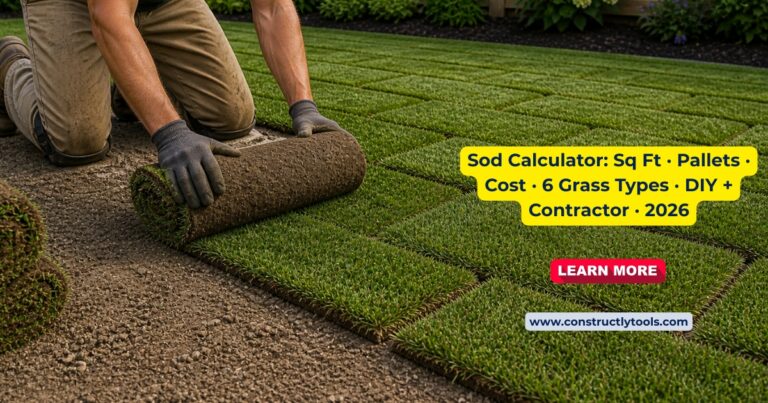
- Lay sod in a brick-like staggered pattern — never line up joints end to end.
- Butt edges tightly together with no gaps — gaps dry out and create dead strips.
- Use a sod roller (rent for $30–$60/day) after installation to press sod firmly against soil and eliminate air pockets.
- Water immediately after laying — sod must be watered within 30 minutes of installation and kept consistently moist for the first 2 weeks.
- Avoid walking on new sod for at least 2–3 weeks until roots have established.
Sod is a living product. It must be installed within 24 hours of delivery — 12 hours in hot weather over 85°F. Never leave sod sitting on the pallet in direct sun. If you can’t install immediately, unroll and water it in a shaded area. Dead sod from delayed installation cannot be returned or refunded at most suppliers.
Hidden Costs Most Estimates Miss
1. Old Lawn Removal and Disposal
If you’re replacing an existing lawn, the old turf must be removed before laying new sod. DIY removal with a sod cutter costs $60–$120/day to rent plus disposal ($50–$150 for hauling). Contractor removal runs $0.15–$0.30 per sq ft. For a 2,000 sq ft lawn, expect $300–$600 for professional removal and disposal — consistently the most overlooked line item in sod project budgets.
2. Soil Preparation and Grading
Even on a bare yard, the soil usually needs tilling (4–6 inches), amending with compost ($40–$80 per cubic yard), and grading. Contractor soil prep runs $0.10–$0.25 per sq ft. DIY tiller rental costs $80–$150/day. Compost amendment for 2,000 sq ft at 2-inch depth requires about 12 cubic yards ($480–$960). Skipping proper soil prep is the most common reason new sod fails to root properly.
3. Irrigation System
New sod requires twice-daily watering for 2 weeks. For any project over 1,000 sq ft, hand-watering is impractical and under-watering is the leading cause of sod failure. If you don’t have an existing irrigation system, budget for one: $1,500–$4,000 for a professional system on a typical residential lot, or $500–$1,500 for a DIY drip/sprinkler setup. This is especially critical for warm-season grasses in summer heat.
4. Sod Roller Rental
A sod roller pressed over new sod eliminates air pockets and ensures root-to-soil contact — the single most important step for rooting success. Rental costs $30–$60/day. Skipping the roller is a common DIY shortcut that leads to uneven rooting, dry patches, and sod failure within 2–3 weeks. Always rent one; it takes about 30 minutes for a typical residential yard.
5. Starter Fertilizer
Starter fertilizer (high in phosphorus, like 18-24-12) promotes rapid root development in new sod and is not optional for best results. Cost: $25–$40 per bag, 1 bag per 1,000 sq ft. A 2,000 sq ft lawn needs 2 bags ($50–$80). Many contractor quotes include this but DIY estimates consistently omit it.
Common Sod Mistakes
Choosing the Wrong Grass for Your Climate
Planting warm-season sod (Bermuda, Zoysia) in a northern climate where it will go dormant and die in winter, or planting cool-season sod (Fescue, Bluegrass) in the deep South where summer heat will kill it, produces a dead lawn within one season. Research the recommended grass types for your USDA hardiness zone and consult a local sod farm before buying. The grass type selection is more important than any other decision in the project.
Not Ordering Enough — Forgetting the 5% Waste
Sod is cut from fields in pieces and must be trimmed to fit curved edges, obstacles, and the perimeter. A lawn that measures exactly 2,000 sq ft will need 2,050–2,100 sq ft of sod to complete without visible gaps. Running short mid-installation and waiting days for a second delivery means exposed soil that dries out and prevents existing sod from rooting. Always order with at least 5% waste, and 10% for yards with many curved edges or obstacles.
Laying Sod Over Dead Grass or Weeds
Laying new sod directly over existing dead turf is the most common reason DIY sod projects fail. The dead organic layer acts as a barrier to rooting, traps moisture, promotes fungal disease, and prevents the new sod from contacting mineral soil. Remove all existing vegetation and till before laying sod. This step is not optional — it is the foundation of successful sod installation.
Leaving Gaps Between Sod Pieces
Gaps between sod pieces, even small ones, dry out immediately and become permanent dead strips. Sod must be butted tightly edge-to-edge with no gaps. Use a sharp knife to trim pieces to fit precisely at obstacles and edges. Gaps cannot be fixed after installation — the dried edges will not rehydrate and re-establish.
Under-Watering in the First Two Weeks
New sod has no established root system and cannot recover from even a single missed watering in hot weather. Twice-daily watering (morning and evening, enough to penetrate 1–2 inches into the soil) is mandatory for the first 2 weeks. The most common reason for sod failure — especially in summer — is a homeowner who watered properly for the first few days, got busy, and let the sod dry out on day 5 or 6. Set reminders or use an irrigation timer.
How We Calculate
Sod to Order (sq ft) = Area (sq ft) × 1.05 · Pallets = CEILING(Sod to Order ÷ 450)
The 450 sq ft per pallet is the US industry standard per Turfgrass Producers International (TPI), the trade association for commercial sod producers. Individual farms may vary — always confirm actual pallet coverage with your supplier before ordering. The 5% waste factor is the standard minimum; use 10% for yards with many curves, obstacles, or irregular shapes.
Material pricing ranges reflect 2026 US national average pricing from HomeAdvisor completed project data and regional sod farm surveys. Labor ranges reflect contractor rates per RSMeans 2026 unit cost data for sod installation. Prices vary significantly by region — warm-season sod is typically 15–25% cheaper in the South where it is grown locally vs the North where it must be shipped.
Frequently Asked Questions
Use these calculators to plan your full landscaping or outdoor project.
Measurement Tools
Material Calculators
- Turfgrass Producers International (TPI) — Sod Production Standards — Industry standard pallet coverage of 450 sq ft used in the calculator formula and pallet chart. TPI is the trade association representing commercial sod producers in the US. Referenced for the 450 sq ft/pallet standard and installation best practices. Turfgrass Producers International, current edition.
- HomeAdvisor True Cost Guide 2026 — US average sod pricing by grass type ($/sq ft and $/pallet), contractor installation labor rates, and completed project cost ranges for residential sod installation. Referenced for all cost estimates in the cost table, worked examples, and FAQ answers. HomeAdvisor / Angi, 2026.
- RSMeans Building Construction Cost Data 2026 — Labor unit cost data for sod installation by grass type and project size, used to validate and supplement the contractor labor rate ranges in the worked examples. RSMeans / Gordian, 2026.
- US Cooperative Extension Service — Turfgrass Management Publications — Best practices for sod installation timing by grass type and USDA hardiness zone, soil preparation requirements, establishment watering schedules, and regional grass type recommendations. Referenced for installation timing table, watering guidance, and soil preparation sections. USDA Cooperative Extension, multiple state editions.
Sod pricing reflects 2026 US national average pricing from HomeAdvisor and regional sod farm data. Prices vary significantly by region — warm-season sod grown locally in the South is typically 15–25% cheaper than the same grass shipped to northern markets. Always get 3 local quotes and contact sod farms directly for 5+ pallet orders. ConstructlyTools does not have a paid relationship with any sod supplier or contractor mentioned on this page.

Prakash
Prakash is the founder and editor of ConstructlyTools. He researches, develops, and maintains construction calculators, material estimators, cost guides, and DIY planning resources designed to help homeowners, contractors, and builders make informed project decisions.
Every calculator and guide is researched using trusted industry references, published building standards, manufacturer specifications, and reliable construction pricing sources. Each page is reviewed for formula accuracy, pricing methodology, readability, and practical usefulness before publication and is updated regularly as standards or market prices change.
Every calculator and article published on ConstructlyTools is independently reviewed for formula accuracy, pricing methodology, readability, and practical usefulness before publication. Content is updated whenever construction pricing, industry standards, or building code references significantly change.
This page was researched, written, and reviewed in accordance with our Editorial Policy.